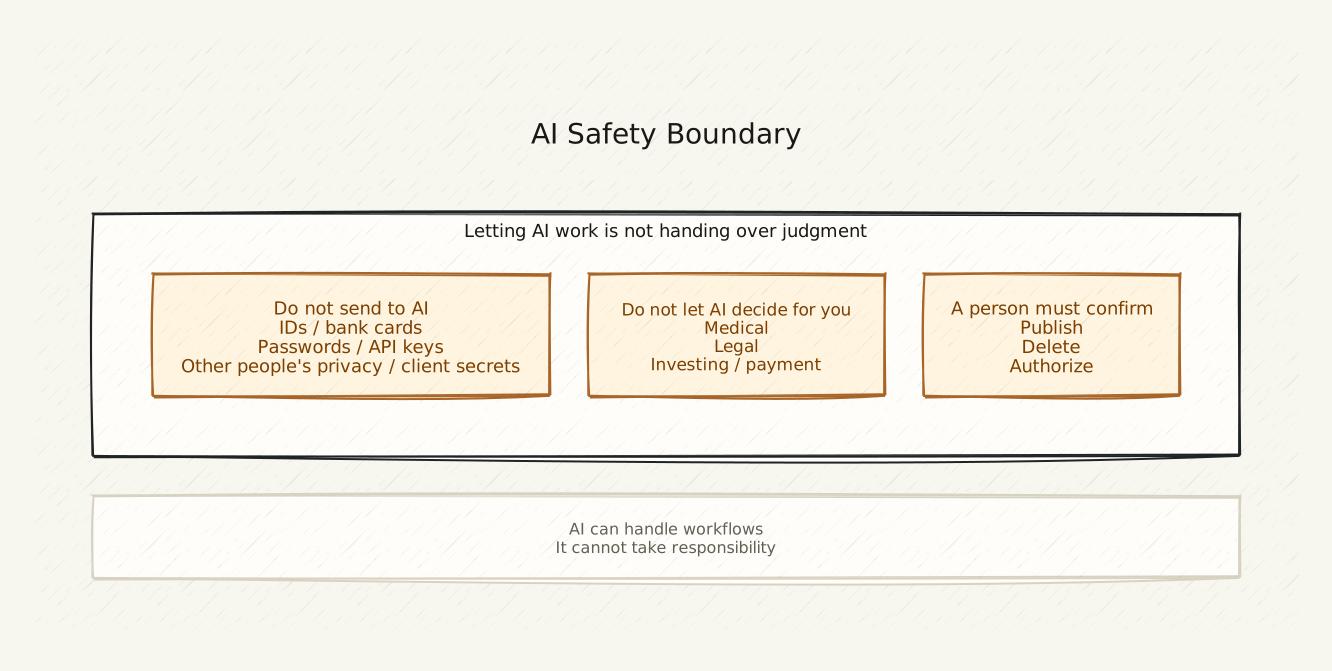
One Clear Statement
Letting AI do work does not mean handing over your judgment. Some things must be done by a person.
What Not to Send to AI
Government IDs (ID cards, passports, driver’s licenses)
Any complete photo or number from an official document.
Why: This information can be used for identity impersonation. Even if AI would not leak it intentionally, how it handles this data may not match your expectations.
Complete Bank Card Information
Card number, expiry date, CVV, online banking password.
Why: Complete bank card information can be used for fraud directly. No legitimate AI service needs this information from you.
Complete Family Privacy
Home addresses, schools, workplaces, full name + photo combinations.
Why: When you publish content, these combinations may expose family members’ privacy.
Account Passwords and API Keys
Login credentials, API Keys, OAuth tokens.
Why: These are equivalent to handing over account control. Codex will tell you what authorization it needs, but you should not give it the password itself.
Other People’s Confidential Information
Business data, contracts, or chat logs that you do not have the right to disclose.
Why: You do not have the right to consent to this information being processed by AI on behalf of others.
What Not to Let AI Decide for You
Medical Advice
AI can explain medical concepts but cannot replace a doctor.
Correct use: “Help me understand what some of these terms in my test report mean” → Okay. “Help me diagnose what medical condition I have” → Not okay.
Bottom line: Decisions about surgery, medication, or diagnosis require a licensed medical professional.
Legal Advice
AI can help you read legal documents but cannot replace a lawyer.
Correct use: “Help me translate these few clauses in this contract” → Okay. “Help me judge whether signing this contract carries legal risk” → Ask a lawyer.
Bottom line: Decisions about contract disputes, litigation, or major property matters require a licensed legal professional.
Investment Advice
AI can organize information but cannot predict markets.
Correct use: “Help me organize how the main A-share and US stock indices have performed recently” → Okay. “Which stock should I buy right now?” → Not okay.
Bottom line: Investment decisions that involve potential loss of principal require your own judgment, or a licensed financial advisor.
AI Makes Mistakes — So You Need to Verify
AI is not perfect. Its answers can:
- Invent a book title that sounds real
- Get a date wrong
- Oversimplify a legal concept into an incorrect one
- Calculate a number incorrectly
Principle: AI saying “done” does not mean it is actually done. After AI completes a task, look at the result yourself.
A Reusable Prompt
If you are not sure whether to hand something to AI:
I want to send [content description] to AI to help with [goal].

Please tell me:
1. Is there any information in this that I should not send to AI?
2. How should I redact or mask this information before sending?
3. What should I personally verify in the result AI gives me?
How to Know You Are Done
You do not need to memorize every rule.
After reading this page, remember just one thing:
Content sent to AI is effectively public content. Do not send anything to AI that you would not be comfortable posting publicly online.
Next: My Minimum AI Workbench — a copyable personal workflow configuration.
Hint: These boundaries are not limiting AI’s capabilities — they protect you. The more powerful AI becomes, the more important clear usage boundaries are.
Public social links